Main Content
By Michele Bakacs (mbakacs@rutgers.edu)
Rutgers Cooperative Extension – Middlesex and Union Counties
Read this article as a PDF: salem.njaes.rutgers.edu/wp-content/uploads/2026/09/Earth-Day-Every-Day-September-2026.pdf
Every time you identify a plant with your smartphone, you could be helping scientists track invasive species across New Jersey.Using the free iNaturalist app, anyone can contribute observations that help researchers, conservation professionals, and state agencies monitor emerging invasive species before they become widespread problems.
The Invasive Species of New Jersey iNaturalist Project
Rutgers University, along with the New Jersey Invasive Species Strike Team (NJISST) and the NJ Department of Environmental Protection’s Division of Fish & Wildlife have created an Invasive Species of New Jersey iNaturalist Project to track emerging and widespread invasive species in New Jersey. In addition to plants, the project also tracks emerging and widespread invasive animals and pathogens. This project is led by Dr. Lena Struwe, Professor and Director of Chrysler Herbarium, Rutgers University.
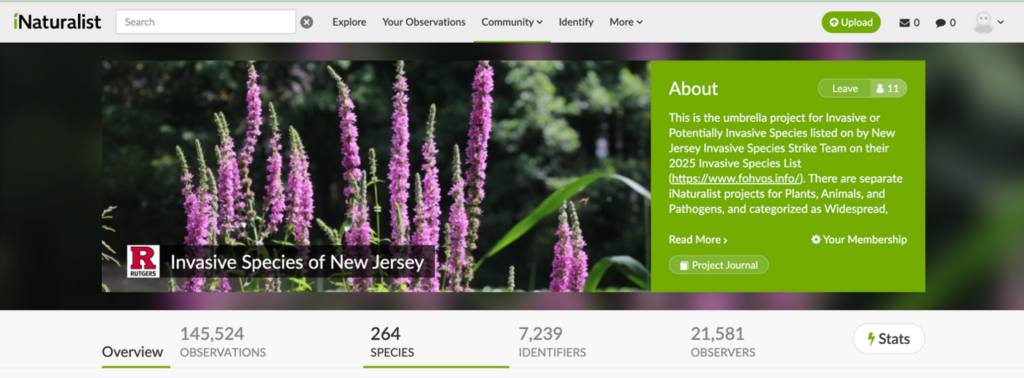
Figure 1. The Invasive Species of New Jersey Project page on iNaturalist.
iNaturalist is an online community network of people sharing biodiversity information to help each other learn about nature. Every time you use the iNaturalist app to add an observation, if the plant species is on the list of New Jersey’s emerging or widespread invasives, the data you collect automatically goes into this project. The data collected helps policymakers, land managers, and researchers within New Jersey and around the world. This is what sets iNaturalist apart from many other species identification apps. Rather than simply identifying a plant or animal for you, iNaturalist turns each observation into a valuable scientific data point.
iNaturalist is a citizen science platform available to everyone that can be used on smartphones, tablets, and desktop computers through mobile apps or a web browser.
When talking to the public and our Extension volunteers, even those who work on conservation projects, many have told me that they continue to use other automated species identification (ASI) apps such as Picture This or Google Lens. These tools can provide excellent identifications, but they generally do not contribute observations to a shared scientific database. As iNaturalist notes, “Nature is changing faster than ever, so we need you to help record what lives where.”
For those who like instant identification, iNaturalist released a new version for users to have quick, in-camera identification suggestions (like in Seek by iNaturalist).
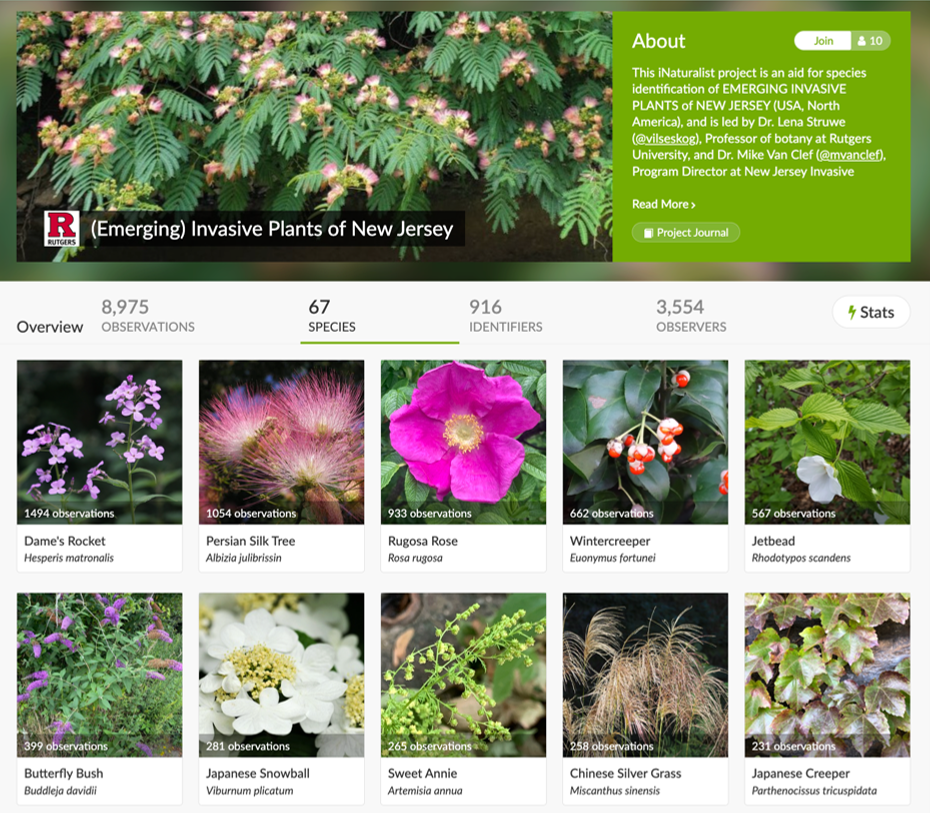
Figure 2. Sixty-seven (67) species are included on the emerging invasive plants of New Jersey iNaturalist list.
Why Your Observations Matter
When you make observations through iNaturalist, the information becomes open data for others to use. In the case of invasive species, your observations help us track how fast these species are spreading, where they are located, and new invaders. Land managers need this information so they can employ early detection, rapid response techniques to control a species before it becomes widespread. The earlier we know about an invasive, the better we can control it, with the least amount of labor and cost. Observations from residential areas, cities, and public parks are also welcome.
Studies have shown that iNaturalist continues to be one of the most accurate species identification apps. And iNaturalist has the advantage of crowd-sourced identification, where an expert will look at your observation and confirm the identification. So actual people confirm the species ID, rather than just relying on AI technology.
Most importantly, your data contributes directly to the state-wide, collaborative project that is currently in use by state agencies, Rutgers, and NJISST to track invasives in New Jersey. If you work or volunteer on a preserve, run an invasive plant strike team, hike on New Jersey trails, or just like knowing what species are around you when you are outside, you can contribute to this project. One way our Rutgers Cooperative Extension Natural Resources working group uses iNaturalist is to help make decisions about what species to highlight for our Invasive Species Spotlight series. We often examine iNaturalist seasonality graphs to identify when species are most frequently observed. Our May spotlight of Dame’s rocket (Hesperis matronalis) is a good example. Because this emerging invasive species starts to bloom in May, most observations occur during that month.
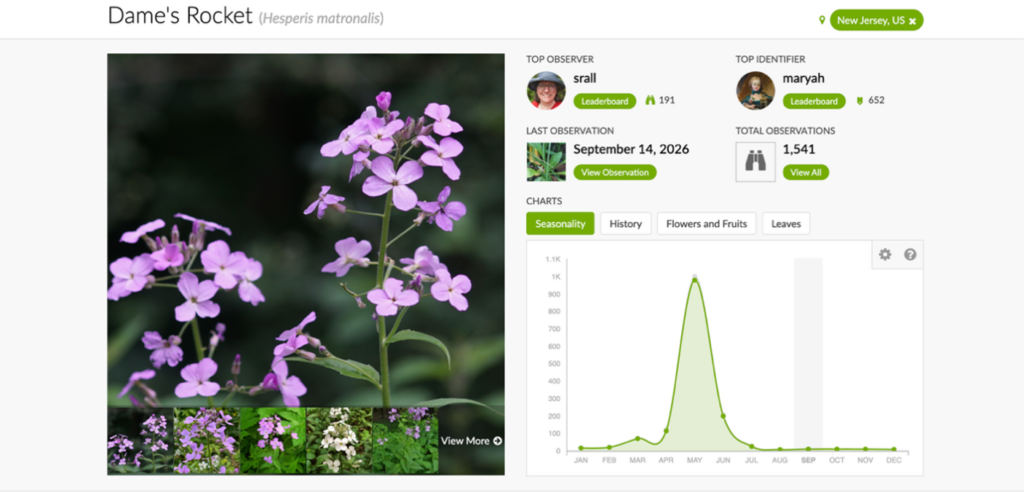
Figure 3. Monthly iNaturalist observation data for Dame’s rocket (Hesperis matronalis) in New Jersey only.
New Jersey’s Invasive Species Management Act
The iNaturalist project also includes the prohibited species listed in the New Jersey “Invasive Species Management Act”. Passed in January, 2026 this act prohibits the sale, distribution, import, export, and propagation of certain invasive plant species. The bill also establishes the New Jersey Invasive Species Council which will advise state authorities on invasive species management. More information and the list of prohibited species is available at the New Jersey Department of Agriculture website.
Getting Started
A free iNaturalist account can be created at www.inaturalist.org/
There are instructions for getting started with iNaturalist on this webpage- help.inaturalist.org/en/support/solutions/articles/151000192921-how-to-make-an-observation
The iNaturalist blog is chock full of information from recent upgrades to their model, species specific information (check out this one on Chile’s 10 cm largest land snail!), and tips from the iNat community.
Note: It is worth noting that automated species identification apps should not replace traditional field methods for species identification and are not always accurate. More information on app accuracy can be found in the research papers listed below.
References and Resources
Hart, A. G., Bosley, H., Hooper, C., Perry, J., Sellors-Moore, J., Moore, O., & Goodenough, A. E. (2023). Assessing the accuracy of free automated plant identification applications. People and Nature, 5, 929–937. doi.org/10.1002/pan3.10460
Minh-Xuan A Truong, René Van der Wal, Exploring the landscape of automated species identification apps: Development, promise, and user appraisal, BioScience, Volume 74, Issue 9, September 2024, Pages 601–613, doi.org/10.1093/biosci/biae077
Schmidt, R. J., Casario, B. M., Zipse, P. C., & Grabosky, J. C. (2022). An analysis of the accuracy of photo-based plant identification applications on 55 tree species. In Arboriculture & urban forestry (Vol. 48). Rutgers University. doi.org/10.48044/jauf.2022.003