Main Content
Steve Yergeau County Agent II, Rutgers Cooperative Extension of Ocean and Atlantic Counties
Link to pdf: https://salem.njaes.rutgers.edu/wp-content/uploads/2026/02/Earth-Day-Every-Day-February-2026.pdf
Just like some couples need assistance from Cupid for Valentine’s Day, plants need help during pollination from pollinators like birds and insects. Pollination is the act of moving pollen grains in a flower from the anther (male part) to the stigma (female part). Pollination enables seed production and is an important process for plants to reproduce. One of the most effective pollinators is wind, as anyone with seasonal allergies or a car coated in pollen in the spring can confirm. Plants have also built lasting relationships with animals to transfer pollen. Plants use nectar, bright colors, and appealing scents to attract birds, insects, and other animals to their flowers to enable pollination.
More than 85% of flowering plants require animals, mostly insects, to move pollen (Ollerton et al., 2011). Pollinators help maintain New Jersey’s biodiversity, as the plants they pollinate provide food, shelter, and resources for many different species. This makes our environment more resilient to climate change and habitat loss. The Garden State’s agriculture industry also depends on pollinators, such as New Jersey’s production of blueberries, cranberries, peppers, squash, and peaches. These crops alone generate around $190,000,000 (USDA 2024 State Agriculture Overview for New Jersey). This makes pollinators a key piece in supporting our local economy.
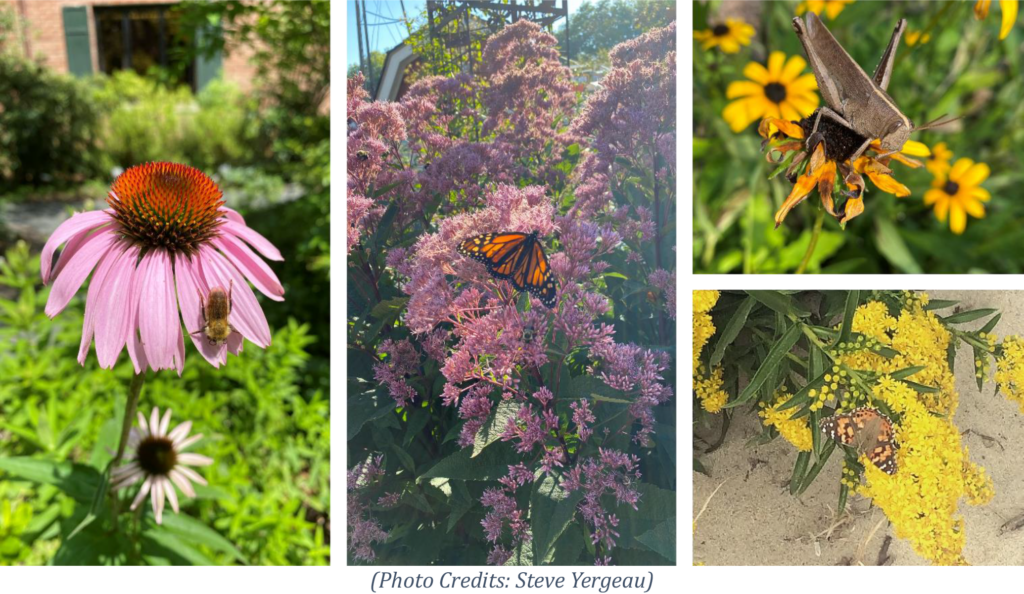
Despite their importance, a recent study (Cornelisse et al., 2025) found that over 1 in 5 pollinators across North America are at elevated extinction risk. The researchers evaluated over 1,500 species of bees, butterflies, moths, beetles, hummingbirds, and nectar‑feeding bats. They found that 22.6% of all assessed pollinators face elevated extinction risk, with bees as the group at most risk.
With the increased risk of extinction facing many pollinator species, it is important for all of us to do our part and spread some love to help maintain pollinator populations.
Why are pollinators at risk?
There are several dangers to pollinator species:
- Climate change: Changing climate is causing flowers to bloom earlier as springs and summers get warmer. Pollinators adapted to specific flowering times may miss the opportunity to feed on plant nectar, causing populations to dwindle.
Rising temperatures are associated with increased drought conditions that reduce the amount of water available for wildlife populations, including pollinators. Some birds and nectar-feeding bats have narrow temperature ranges in which to nest, with rising temperatures placing stress on their ability to breed. On the opposite end of the scale, larger, more frequent rainstorms can cause increased flooding of areas which destroy pollinator homes.
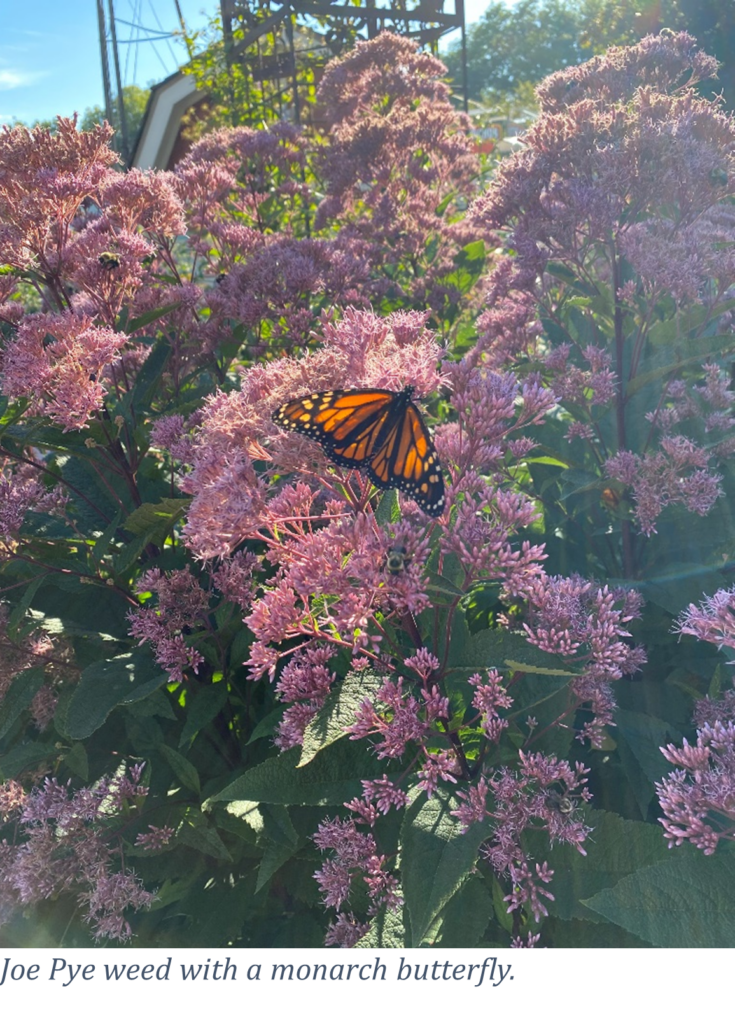
Pollinators have evolved alongside the native plants they pollinate over tens of thousands of years. Some of these pollinators have become so closely adapted to certain plants that they become its “host plant”, whereby the insect exclusively uses one type of plant for food or habitat. The best example is the monarch butterfly (Danaus plexippus) and the milkweed plant (Asclepias species). The monarch butterfly lays eggs solely on milkweed and the emerging caterpillars feed only on milkweed. Loss of habitats containing native milkweeds in our landscape have dramatically affected monarch butterfly populations.
- Habitat loss and fragmentation: As natural areas get developed, the habitats in which pollinators live are being lost or broken up into separate, disconnected pieces. Fewer places to feed and reproduce are causing declines in insects, birds, and other wildlife that assist in pollination.
- Non-native and invasive species: Non-native species are those plants and animals that are introduced into a given geographic area, usually by people or by accident. Invasive species are non-native to an area and cause, or are likely to cause, economic, ecological, or environmental harm or harm to human health. Invasive wildlife, for example, can prey on native pollinators, decreasing populations as pollinators become a food source for these new predators.
Invasive plants, and non-native flowering plants, can also affect pollinator feeding habits. They may have different flowering structures that local pollinators are not adapted to gather nectar from, reducing their ability to both feed and pollinate the plants. The introduction of non-native plants may also introduce new pests and diseases that can affect native plant populations.
What can you do to help pollinators?
Even with all these issues affecting pollinator populations, there are several actions you can take to make a love connection with pollinators:
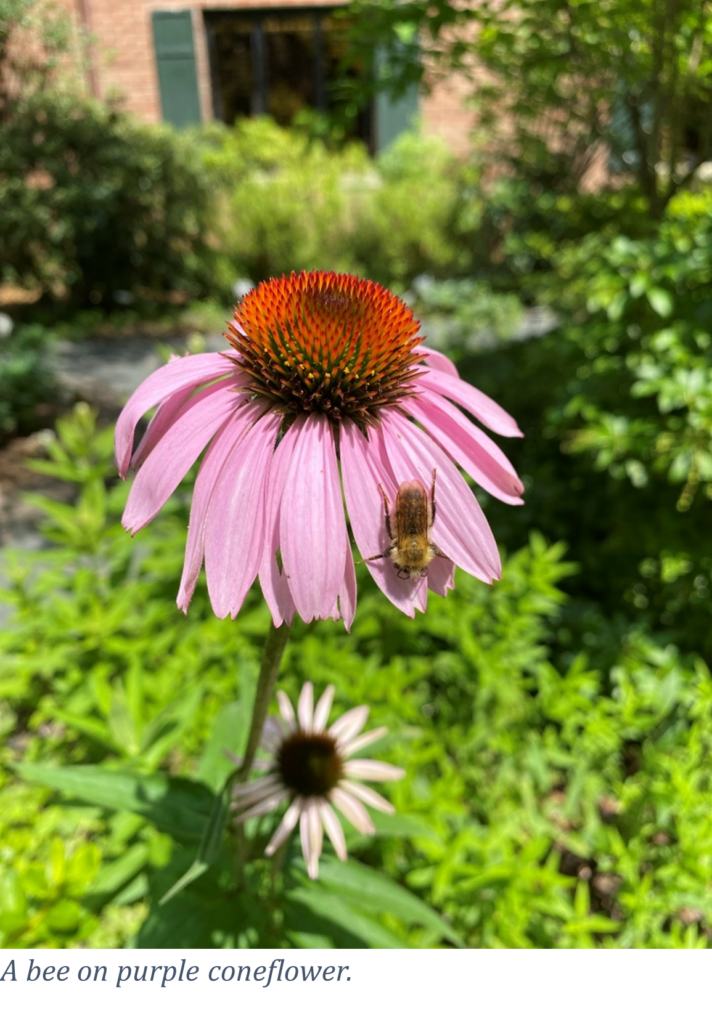
- Plant native vegetation: The number one action you can take to help pollinator populations is to create native habitat by planting native vegetation in your yards. Replace your lawns with native plantings or switch out your current landscaping with native choices. Native vegetation will provide both food and shelter for pollinators. Native plants are adapted to local conditions, so make sure that you know your yard’s site conditions (soil type, soil moisture, amount of shade or sun, etc.) and use that information to match the right plants to your space.
RESOURCES
- The Rutgers Cooperative Extension (RCE) fact sheet Incorporating Native Plants in Your Residential Landscape outlines the steps you’ll need to take to plan a native plant landscape. The fact sheet also includes recommendations for native trees, shrubs, and flowering perennials for New Jersey. Additional resources for native landscaping are included as well.
- Another RCE fact sheet, Invasive Plants and Native Alternatives for Landscapes, describes many types of invasive plants, and gives options for native trees, shrubs, grasses, and vines and groundcovers to replace those invasives. It also describes ways that you can remove invasive plants if present in your landscape.
- The Jersey-Friendly Yards Plant Database allows you to search for native plants based upon your site conditions and lets you filter by your landscape preferences (bloom color and timing, trees vs. shrubs, etc.). After you complete your search, you can create plant lists for your yard to take with you to a nursery when selecting plants. Also on the website is information on where to buy native plants that lists several nurseries organized by county.
- The Native Plant Society of New Jersey has many lists of native plants that are arranged by type of trees and shrubs, by New Jersey county, and by type of garden. They also list gardens, arboretums, and nature centers throughout the state where you can see native plants and get inspiration for your own yard.
- Create pollinator habitat: Another way to increase pollinator populations is to provide habitat throughout the year and not just when flowers are blooming. One way to do this it to leave your leaves on the ground in the fall. Raking up and disposing of your leaves each fall removes insects living in them from the environment. Many insects also use the leaves as cover to hibernate in the winter, as eggs, larvae, or adults. Don’t treat your leaves like trash!
RESOURCES
- The Why Leave the Leaves and How to Do it fact sheet from RCE goes into detail on the reasons why you should not dispose of leaves in the fall and gives instructions on how to leave the leaves for wildlife.
- The Jersey-Friendly Yards website explains how to Create Wildlife Habitat as one of the steps to make your yard sustainable.
- The National Wildlife Federation’s Milkweed for Monarchs program provides information on how to go about planning and building a garden to support monarch butterfly populations. Their website details monarch butterfly identification and how to order milkweeds and other nectar plants for monarchs.
- Use less pesticides: Using plants that are not adapted to local soil, climate, and moisture conditions may lead to excess use of chemicals. These chemicals include pesticides to prevent insect and other pest damage or to remove unwanted plants from your landscape. These pesticides may also affect other insects and plants besides the ones targeted.
Regardless of your use of native or non-native plants in your landscape, strive to limit your use of pesticides that may impact native pollinators. You can do this by properly following the labelled directions for the pesticide you choose. This will lead to less waste from over spraying the pesticide. Remember that the label is the law. It is against the law to use a pesticide in a manner other than what is directed on the label.
You can also carefully evaluate your pest control options and use non-chemical controls if appropriate, like manual removal or traps, before using a pesticide. Using an integrated pest management (IPM) program for your yard and garden can help avoid excess pesticide use.
RESOURCES
- The Earth Day Every Day newsletter article, Principles of Integrated Pest Management for Home Gardens and Landscapes, outlines ways to incorporate IPM at home. Part of IPM is to use strategies to reduce reliance on pesticides as the only option when dealing with pests.
No yard or garden? No problem! Even residents without yards or gardens can show some love to pollinator populations. Any outdoor space, no matter how big or small, can help.
- Plant native flowers in pots and place around your patio or balcony to create a container garden. The RCE fact sheet, Outdoor Container Gardening with Flowering and Foliage Plants, describes the basics of how to design and create container gardens for outdoor spaces. Be sure to use this with the other RCE fact sheets on native plants to give a big boost to pollinator populations.
- Hanging hummingbird feeders in areas that have little to no vegetation is one way to attract these pollinators. Information on attracting hummingbirds to your yard can be found in the RCE fact sheet Attracting Ruby-throated Hummingbirds to Your Yard.
Following these steps will be a labor of love for pollinators that visit your yard and garden!
References
Cornelisse, T., D.W. Inouye, R.E. Irwin, S. Jepsen, J.R. Mawdsley, M. Ormes, J. Daniels, D.M. Debinski, T. Griswold, J. Klymko, M.C. Orr, L. Richardson, N. Sears, D. Schweitzer, and B.E. Young. 2025. Elevated extinction risk in over one-fifth of native North American pollinators. Proceedings of the National Academy of Sciences (PNAS) of the United States of America. 122(14): 1-8.
Ollerton, J., R. Winfree, and S. Tarrant. 2011. How many flowering plants are pollinated by animals?. Oikos. 120: 321-326.