Main Content
By Paige Radcliffe (pradcliffe@oceancountynj.gov), Douglas Zemeckis (zemeckis@njaes.rutgers.edu), and Steve Yergeau ( yergeau@njaes.rutgers.edu)
Rutgers Cooperative Extension – Ocean County
Link to PDF: https://salem.njaes.rutgers.edu/wp-content/uploads/2026/08/Earth-Day-Every-Day-August-2026.pdf
The month of August at the Jersey Shore is the season’s last great exhale, a fleeting stretch of sun-soaked days that seem to linger just a little longer. As we embrace the warmth before the tides of time gently carry another summer into memory, it is important to reflect on how we can continue to care for our coastal resources even as summer starts to fade.
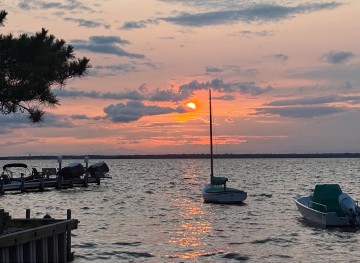
Figure 1: An August sunset on Barnegat Bay (photo credit: Paige Radcliffe)
There are steps everyone in New Jersey can take to be responsible stewards of our marine resources — whether you live by the water, travel to the shore for recreation, or even if you live inland. The objectives of this newsletter are to provide resources where you can acquire science-based information and identify recommended actions that you can take to be a responsible coastal steward.
This collection of the resources is a summary of materials from Rutgers Cooperative Extension’s 2026 Coastal Stewardship Course, which is part of the Barnegat Bay Shellfish Restoration Program and our collaborations with ReClam the Bay. You don’t have to wait until next summer’s course to start being a responsible coastal steward because there are many educational resources and opportunities listed below that can instill coastal stewardship qualities into your personal or business lives.
General Educational Resources
Starting with a base of science-backed education is a great way to build that foundation. Knowledge is power and gaining knowledge from these resources will help to prepare you to be a responsible coastal steward of our marine resources and ecosystems. These organizations and entities play an important role in monitoring, researching, and educating the public on environmental issues in New Jersey. Here are some educational resources that they have available, which can help you to learn stewardship principles:
- Rutgers Cooperative Extension (RCE)
- Cooperative Extension
- Earth Day Every Day Webinar Recordings (past recordings)
- Earth Day Every Day Newsletters- sign up here
- Soil Testing Lab
- New Jersey Department of Environmental Protection (NJDEP)
- Environmental Protection Agency (EPA)
- Jersey Friendly Yards (JFY) – homepage
- National Oceanic and Atmospheric Administration (NOAA)
- US Fish & Wildlife Service
- Atlantic States Marine Fisheries Commission
- Barnegat Bay Partnership (BBP)
Educational Resources for Coastal Resiliency
The term resiliency refers to being able to withstand change. Along the coast of New Jersey, there is a need to adapt to long-term changes such as more frequent storms, flooding, and sea-level rise.
Here are some educational resources that are available regarding this topic area, which can help you to learn how to best be prepared:
- Jacques Cousteau National Marine Estuary Reserve
- JCNERR Coastal Resilience Tools
- NJ ADAPT
- NJDEP
- NJ Coastal Resilience Collaborative
- Megalopolitan Coastal Transformation Hub (MACH) | Megalopolitan Coastal Transformation Hub
Putting Education into Practice
The choices we make in our daily lives can have a meaningful impact on the environment. For example, the purchases we make can support certain products, businesses, and practices that protect our coastal resources. By purchasing local seafood, we can reduce the environmental impact associated with transporting food long distances while also supporting local fishermen and communities. Choosing seafood from sustainable sources can further help protect marine ecosystems and maintain healthy population dynamics.
Seafood Related Resources
Furthermore, there are numerous opportunities for shell recycling within the state. Shell recycling keeps discarded shell out of landfills and plays an important role as a settlement habitat for oyster larvae. By deploying discarded shell back into our coastal environment, it allows natural reef systems to rebuild which acts as an important natural buffer, supports marine habitat and while oysters improve water quality. If you view the DEP’s program overview page, it can direct you to shell recycling locations, participating restaurants that recycle shell, and even how to become a Wildlife Corp Member and potentially volunteer to deploy the recycled shell to build back oyster reefs (Figure 2). There are numerous opportunities for shell recycling within the state. If you view the DEP’s program overview page, it can direct you to shell recycling locations, participating restaurants.
Shell Recycling Opportunities
- NJDEP Shell Recycling Program
- American Littoral Society- Shell Recycling
- Jetty Rock Foundation- Shell Recycling Programs
- Long Beach Twp – Field Station- Oyster Shell Recycling Program – LBT Marine Field Station
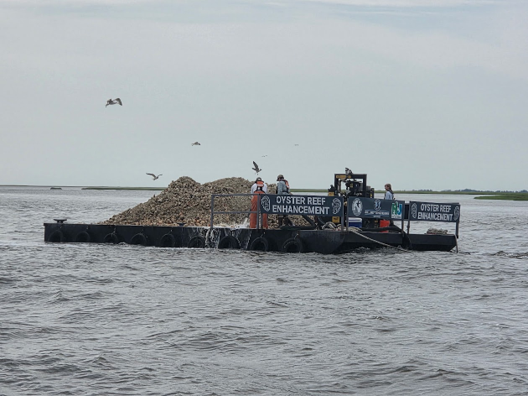
Figure 2: NJDEP shell recycling deployment to build back oyster reefs (photo credit Douglas Zemeckis)
Marine Debris Related Resources
Similarly, reducing our use of single-use items can significantly decrease the amount of waste we produce. Reusing bags, bottles, and containers conserves natural resources and prevents unnecessary plastic from entering landfills, oceans, and other ecosystems. Marine debris occurs when a solid man-made material finds its way into a marine environment and can ultimately be broken down through natural processes into smaller pieces. This can cause harm to marine ecosystems and marine life through ingestion or entanglement. Changing our behaviors by making choices that encourage more sustainable practices fosters coastal stewardship as the best way to reduce marine debris is preventing it in the first place. Use our marine debris webpage for opportunities to reduce and remove marine debris and find out more- Such a Waste – Marine Debris in our Coastal Waters.
Even small, everyday decisions can add up to create a positive impact on the environment. Look into the Jersey Friendly Yards program to see how getting your yard certified can prevent fertilizer pollution in our waterways, while also making it pollinator friendly. Having native plants supports biodiversity, conserves water and require lower maintenance.
Environmentally Friendly Landscaping Resources
- Jersey Friendly Yards
- Rutgers Cooperative Extension E.A.R.T.H. Center Programs
Citizen Science & Volunteer Opportunities
If you are looking to garner a greater sense of place and invest time into some of the stewardship efforts mentioned above, there are volunteer and citizen science opportunities. These are hands-on ways to support local organizations and projects while also understanding what is going on in and around your community. From beach clean-ups to wildlife monitoring, there is something for everyone’s interest. You can also volunteer to serve on various environmental and resource management panels, commissions, councils, or boards. Look to this previous newsletter on “Getting Involved to make a Difference for the Environment“ for more tips.
- Jacques Cousteau National Estuarine Research Reserve (JCNERR) – homepage
- ReClam The Bay- ReClam the Bay (RCTB) | Help Us Save Our Beautiful Bay
- American Littoral Society- Littoral Society – Home
- Save Barnegat Bay- Save Barnegat Bay – Save Barnegat Bay
- Barnegat Bay Partnership- Barnegat Bay Partnership – Barnegat Bay Partnership
- Clean Ocean Action- Clean Ocean Action: Be the Solution to Ocean Pollution
- Save Coastal Wildlife- Save Coastal Wildlife
- NY/NJ Baykeeper- NYNJ Baykeeper – Protect, preserving, and restoring the ecological integrity and productivity of the NY-NJ Harbor Estuary
- NJDEP- NJDEP| Fish & Wildlife | Volunteering
- The Nature Conservancy- The Nature Conservancy in New Jersey
- Marine Mammal Stranding Center- Get Involved
- Conserve Wildlife New Jersey- Home | Conserve Wildlife Foundation of New Jersey
- Return The Favor New Jersey- reTURN the Favor – Horseshoe Crab Rescue Program
- Partnership for the Delaware Estuary- Home for the Partnership for the DE Estuary, Connecting People, Science, and Nature for a Healthy Delaware River and Bay
- Alliance for a Living Ocean- Become a volunteer – Alliance for a Living Ocean
- Wetlands Institute- The Wetlands Institute
Citizen Science & Volunteer Opportunity Apps
- SciStarter – Citizen Science -find volunteer and citizen science opportunities
- MyCoast: New Jersey – MyCoast -track our changing coasts
- A Community for Naturalists · iNaturalist -naturalist of life on earth
- Home | Marine Debris Tracker
- Zooniverse -assist professional researchers
- CoCoRaHS – Community Collaborative Rain, Hail & Snow Network
- NJDEP| Fish & Wildlife | Recreational Saltwater Volunteer Angler Survey
Conclusion
Being a coastal steward can mean different things to different people, (Figure 3) but what it encompasses is the need to protect our marine resources as everything connects to the ocean. There is something that everyone in New Jersey can do to enhance their knowledge and improve their behaviors, and in turn become a more responsible citizen and coastal steward. Adopting some of the practices listed in this article are great steps in this direction.
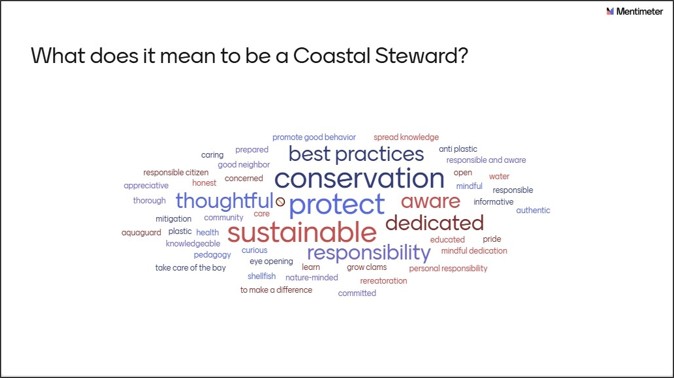
Figure 3: Keywords of responses from 2026 Coastal Stewardship course participants when asked to describe what coastal stewardship means to them.